Microgrids in California: How State Regulations Continue to Limit the Deployment of Microgrids

Filipp Franke Quijada, 2L

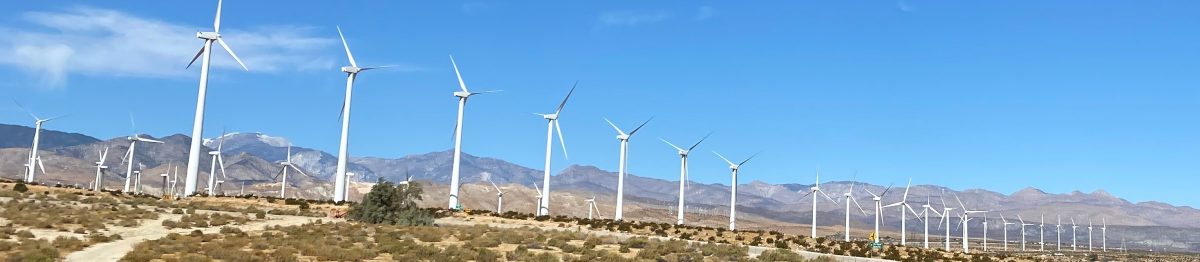
[1] The year 2022 was one of the hottest on record in California, creating a historic demand for electricity. California’s electrical grid was pushed to the edge of its capacity. The crisis also illustrated how microgrids could help make the current electrical grid more resilient — supplementing energy production through the use of distributed energy resources.  In 2018, the California state Legislature passed Senate Bill 1339 to facilitate the commercial development of microgrids. However, five years later, regulatory barriers to implementation persist. California’s legislature must pivot its approach to address these barriers head-on to facilitate the implementation of microgrids. 

[2] Extreme weather events fueled by global climate change, like the 2022 heatwave, put immense stress on the already strained electrical grid. When extreme weather events occur, electricity demand increases in parallel because of the use of air conditioners and other household appliances. However, when demand outstrips supply generated by the grid, blackouts occur.

Since the turn of the last century, we have depended on the traditional electrical grid to supply our electricity demand. Rigid and linear, the traditional electrical grid uses centralized facilities coupled with a defused network of transmission lines and distribution centers to deliver electricity to consumers. However, this modality is not resilient. It cannot quickly recover from emergencies or disasters and thus leaves consumers without electricity when needed most. As the frequency of extreme weather events continues to increase, it is clear that the electrical grid, a relic of 20th-century technology, is under-equipped to deal with 21st-century issues.

[3] Microgrids are a relatively new implementation of distributed energy resource technology that can help bring the electrical grid into the 21st century. As its name implies, a microgrid, at its most basic level, is a smaller electrical grid. Contrary to the traditional grid, a microgrid’s generation, transmission, and distribution infrastructure is highly localized to a single parcel, but can be scaled to service a campus or community. Crucially, a microgrid can “island” or, in other words, independently provide power to its users and run in parallel to the traditional grid. Notably, a microgrid’s ability to self-generate energy while “islanding” allows the entity serviced to continue to operate when the larger grid has been shut down. This ability to keep the lights on during a blackout improves resiliency. Naturally, greater implementation of microgrids helps to mitigate demand and subsequently eases stress on the grid.

[4] In an effort to improve resiliency and modernize California’s electrical grid, the state Legislature passed Senate Bill 1339. The legislation directed the CPUC to pursue policy actions, including the development of rates, tariffs, and rules necessary to remove barriers limiting the deployment of microgrids without shifting costs onto non-benefiting customers. This multi-track proceeding has yet to be completed. Currently on Track 4 of a total of 5 Tracks, stakeholders, including each of the state Utility Companies and the CPUC are developing a microgrid tariff.

[5] As a whole, SB 1339 has improved the deployment of microgrids. However, the “over-the-fence” rule has proven to be an immovable barrier that has hamstrung the greater development of microgrids within the state. Section 218 of the California Utilities Code, known as the “over-the-fence” rule, limits the distribution or sale of self-generated energy to only adjacent parcels and outright bars electricity transmission across public streets. Any entity that violates the over-the-fence rule is then subject to public utility regulation. In most cases, the regulations imposed are an administrative and financial burden prohibitive to the development of commercial microgrids. Additionally, policy measures implemented through SB 1339, must conform to and may not circumvent or modify the “over-the-fence” rule since it’s codified in state law. Thus, the solution to the issue is clear – If microgrids are to be deployed in greater volume in the future, the state legislature must first address the “over-the-fence” rule.

Taiwan in the Global Climate Fight, and how America can Support it.

by Linden Dexter, 2L.

[1] The recent 27th United Nations Climate Change Conference (COP 27) provided an illustration of a novel way to protect the climate: by passing the Taiwan Enhanced Resilience Act (TERA) as part of the National Defense Authorization Act of 2022 (NDAA).[1]

[2] Our climate is rapidly deteriorating, and the world is running out of time to come together and stabilize it. Humanity cannot afford to allow any country to prevent another country from participating in the global climate fight. In response to strong support among attendees for Taiwan’s inclusion in the conference, China reminded the world of its stance on Taiwan, stating: “There is only one China in the world, and Taiwan is an inalienable part of China”.[2] China maintains that Taiwan is a part of China, while Taiwan does not. The two countries have been locked in a deeply ambiguous, pseudo cold war for decades. China wields significant economic and political influence on the global stage. For another country to defy China’s stance on Taiwan would most likely have disastrous effects for many nations that benefit greatly from Chinese trade. As a result, China’s brief statement regarding Taiwan at COP27 will most likely have a significant chilling effect on other nations and thus impede Taiwan’s aspirations to work more closely with the international community.

[3] Despite being excluded from COP27, Taiwan has nonetheless diligently worked towards a better climate future. In March of 2022, Taiwan published “Taiwan’s Pathway to Net-Zero Emissions in 2050”, a plan containing 4 major transition strategies for Taiwan in the fields of energy, industry, lifestyle, and social life, as well as legislation promoting sustainability and green R&D.[3] This indicates that Taiwan genuinely wants to cooperate with the rest of the world in working toward a better climate future, if given the chance to do so.

[4] Therefore, as part of its efforts to protect the environment, America must continue to counteract Chinese influence over Taiwan by passing the NDAA, which contains the TERA. Congress has passed the bill and has presented it to President Joe Biden.[4] The TERA contains approximately 10 billion dollars in security assistance and weapon procurement for Taiwan, as well as the establishment of training programs for Taiwan’s military. Though the link between a military funding bill and the environment may not be facially apparent, the benefit comes from Taiwan’s increased legitimacy on the global stage. Every action America takes to support Taiwan reverberates in the international community and indicates to the world that Taiwan is a valuable American partner. Just as China’s stance on Taiwan may have a chilling effect on international cooperation, America’s stance on Taiwan may have a warming effect that counteracts it. This, in turn, may encourage other countries to advocate more fiercely for Taiwan’s inclusion in global climate ventures.

A Brief Digest of West Virginia v. EPA and the Major Questions Doctrine

This June the Supreme Court issued opinions on several controversial issues: guns, abortion, and the environment. While the overall effect of the opinions remains uncertain, the Court’s decision in West Virginia v. EPA forecloses a key avenue for federally mandated decarbonization. And yet the opinion represents somewhat a mixed bag, it could have gone farther, as some had speculated the imminent upheaval of the administrative state, but there remains an unanswered question regarding the breadth of application for the Court’s newly fashioned “major questions doctrine.” Ultimately, the Court’s decision represents another nail in the coffin for U.S. efforts to reduce its carbon emissions and avert continued global warming. Because this decision has already spawned much commentary by administrative law and environmental law scholars (for example, here and here), this post provides just a short description of this issue for the uninitiated.

In 2015, the EPA promulgated the Clean Power Plan (“CPP”) as the Obama Administration’s regulatory program to curb carbon dioxide emissions from existing coal-fired power plants.  However, due to a federal court injunction and a change in presidential administrations, the CPP never went into effect. The plan imposed limits on the amount of allowed emission of carbon dioxide from coal power plants and established the agency’s best system of emissions reduction (“BSER”). The BSER for operators of existing coal power plants ultimately would transition coal plants to gas, and gas plants to renewable sources as the only practical way to meet the emissions target. The Court questioned whether Congress intended to empower the EPA with the authority to require grid operators to close existing coal power plants and mandate a shift toward less carbon intensive power production.

The Court gave name to its skepticism as the Major Questions doctrine. It presumes that “Congress intends to make major policy decisions itself, not leave those decisions to agencies.” The doctrine is a relatively new creation of the Supreme Court, having its origins in the FDA v. Brown & Williams case.  The Court’s majority characterizes the purview of the doctrine as certain extraordinary cases involving the principles of separation of powers and a practical understanding of legislative intent, where a federal agency appears to assert regulatory powers of such breadth over a sector of the economy or society that the Congress could not have intended to delegate under the relevant statute. Because of the broad possibilities of what constitutes major policy decision, this doctrine has the potential to throw previously legislated issues back to a more divided Congress.

Here, the Court has decided that when Congress created a gap-filler provision in Section 111(d) of the Clean Air Act, it was not sufficiently explicit as to whether this provision could result in regulatory action amounting to a major policy decision. The Court noted that historically the EPA had not used Section 111(d) in any significant manner prior to the CPP. Thus, the Major Questions doctrine appears to create an additional barrier that prevents novel regulations emerging from old law.

The upshot of this ruling is clear, the Court intends to restrain major novel regulatory action without explicit authority granted by Congress. This doctrine could prevent agencies from addressing novel problems in a variety of areas. As it relates to climate change, this decision hamstrings the federal government’s ability to implement a centralized plan to transition the country away from fossil fuels. Once again, business-as-usual politics ignore or disbelieve our ongoing climate emergency.

Student Environmental Law Writing Competition Opportunities

Environmental Law Writing Competitions Offer Opportunities for $$, Showcasing Ideas and Writing to the Bar, and Bragging Rights on your Resume.

Writing competitions can be excellent opportunities for law students to get their (relatively) short course papers recognized publicly . . . usually with a nice prize check to boot! Sometimes, the prize will come with an opportunity to have the paper published. Most importantly, for career development and future job interviews, it comes with a great resume line-item and bragging rights for a paper well done!

Ask your favorite environmental law professor for help. They are always happy to support eager-beaver environmental law students who want to save the world! (At Santa Clara Law, that would be . . . me!)

Here are a few upcoming writing competition deadlines:

Environmental Law Student Writing Competition – sponsored by the California Lawyers Association Environmental Law Section. Submission Deadline: July 31, 2022. “The competition is free and open to all law school students currently enrolled at any law school located within California. Entries may be on any issue of legal and/or policy significance relating to the field of environmental law, and must be 5,000 words or less.” First place prize is $1000 and recognition at the October 2022 Yosemite Environmental Law Conference.

Annual Professor John R. Nolon Student Writing Competition – sponsored by the Pace Environmental Law Review. Submission Deadline: August 15, 2022. (This information came across one of the listservs I am on, and there does not seem to be any specific info posted on the web. So, it may be prudent to check with the Pace Environmental Law Review before submission.) Here’s the info: “Entries are encouraged from any law student from now until the final deadline as August 15, 2022. This year’s topic is Environmental Constitutionalism. Maximum length, 35 double-spaced pages, 12pt times new roman font (including footnotes, which may be single-spaced, 10pt times new roman font). To submit, email pelracq@law.pace.eduwith the subject line reading: PELR 2023 Writing Competition. Prize Awarded: 1st place: $500 and publication in PELR. 2nd and 3rd place – consideration of publication in PELR. Criteria for judging entries will be organization, practicality, originality, quality of research, clarity of style.”

Annual Student Essay Competition – sponsored by the Yale Law Journal. Submission Deadline: Sept. 9, 2022. This year’s competition topic is “Law and the Changing Environment,” designed to capture a broad range of legal topics related to the environment, energy, EJ, indigenous people, animal rights, financial regulations, etc. Eligible students include any JD and LLM students of classes 2018-20225 of any ABA-accredited school. Essays should be 4000-8000 words, including footnotes. Up to three winners will receive a $300 cash prize and published in the Yale Law Journal Forum (the Yale Law Journal’s online web publication).